History · Volume 2
High Power, Composites and Electronics
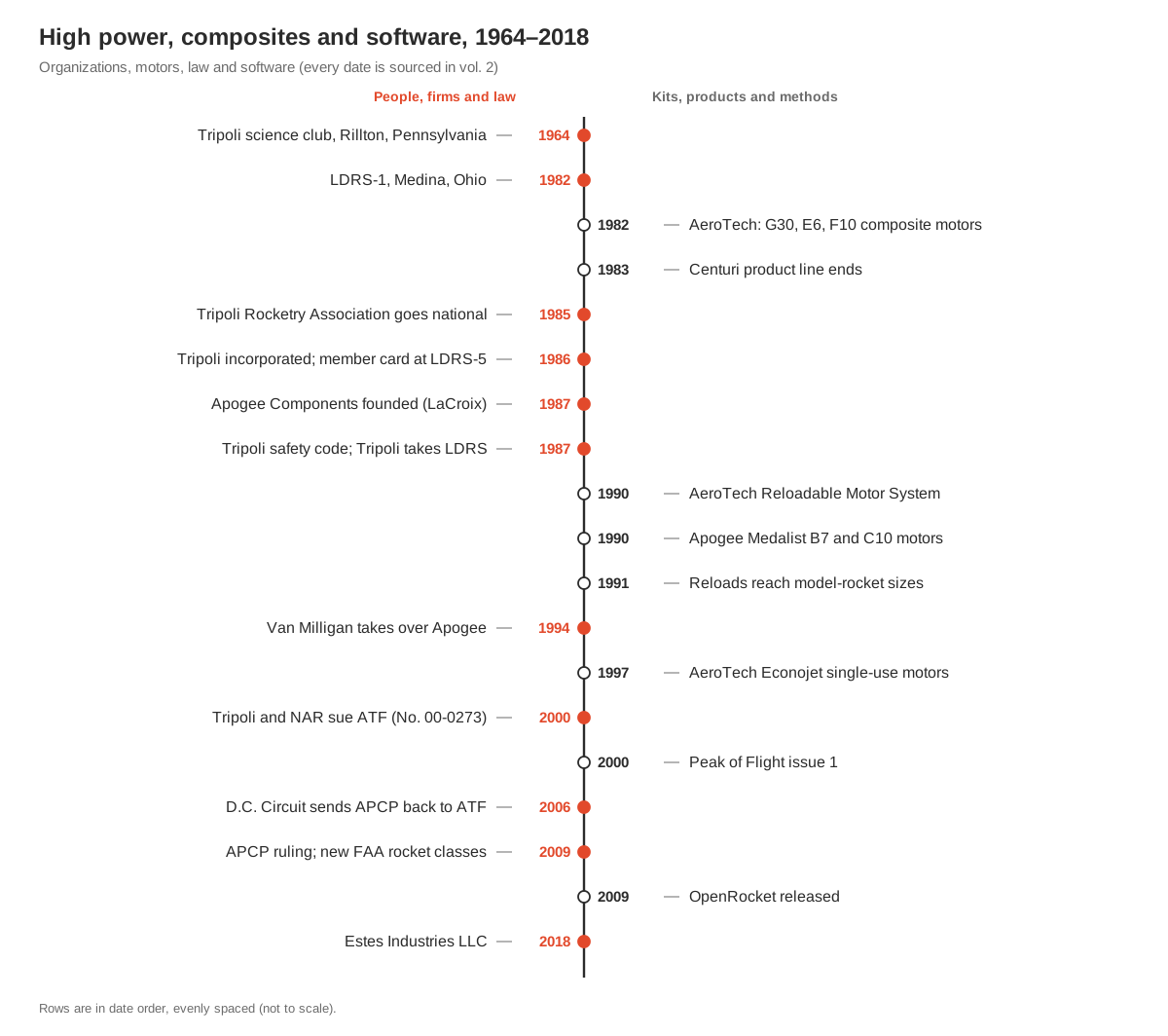
How a Pennsylvania science club and a launch in an Ohio field grew into the Tripoli Rocketry Association and LDRS; how AeroTech's composite and reloadable motors broke the black-powder ceiling; how certification, the FAA and a ten-year lawsuit against the ATF settled the rules; and how Apogee, RockSim, Peak of Flight, OpenRocket, on-board electronics and the laser cutter changed the way rockets are designed, flown and built
Introduction
The first volume of this dive ended at about 1980 with model rocketry in its classic form: black-powder motors from Penrose, paper-and-balsa kits from the catalog, the NAR safety code and the Barrowman equations. This volume follows what happened next, when part of the hobby outgrew all of those.
I fly high power, as a member of both the NAR and Tripoli, and I have done for many years. My early rockets carried film cameras; later ones carried electronic video, electronic parachute deployment, GPS location and altitude reporting. I have also read nearly every issue of Tim Van Milligan’s Peak of Flight newsletter, which is one of the main sources for this volume. Much of the history here is the history of the equipment I have flown.
The story has four threads, and they cross repeatedly:
- Organizations. A teenage science club in western Pennsylvania became the Tripoli Rocketry Association, and a launch in a field in Medina, Ohio became LDRS. Between them they created high-power rocketry as an organized, insured, self-regulated hobby.
- Motors. Ammonium perchlorate composite propellant (APCP), the propellant of professional solid rockets, reached hobbyists through AeroTech and others, first in single-use motors and then in reloadable ones.
- Law. Certification, the FAA’s rocket classes and a lawsuit against the Bureau of Alcohol, Tobacco, Firearms and Explosives decided who may fly what, and where.
- Tools. Computer simulation, on-board electronics and digital fabrication changed how rockets are designed, flown and built.
2.1 The black-powder ceiling
Black powder was the right propellant for the hobby that Carlisle, Stine and Estes built. It is cheap, it can be pressed by machine into paper casings, and a single grain can carry the propellant, the delay and the ejection charge in one motor. Its weaknesses show as motors get bigger. It is weak for its weight, it is brittle (a cracked grain can burst the casing), and large black-powder motors are hard to make reliably. For practical purposes, commercial black-powder motors stopped at the low end of the alphabet of impulse classes; the Motors dive covers the details.
Professional solid rockets had long since moved to composite propellants: a crystalline oxidizer, usually ammonium perchlorate, bound in a rubbery fuel such as a polymer resin, often with powdered metal added. APCP delivers much more energy per kilogram than black powder, can be cast into large grains of almost any shape, and burns smoothly when it is properly made. Hobbyists who wanted to fly bigger rockets wanted it.
The obstacles were not technical. APCP sat on the federal explosives list from the first list in 1971, so the law treated it like dynamite. The NAR’s code had been written around small, commercially made black-powder motors and did not cover anything much larger. The people who wanted to fly big rockets were, for a while, on their own.
2.2 Tripoli: from a science club to a national association
The Tripoli Rocketry Association’s own history traces its origin to December 1964, when a group of junior-high students in Rillton, Pennsylvania formed a science club. Its key founder was Francis (Glenn) Graham. In 1966 Graham moved to nearby Irwin and joined forces with Curt Hughes, who had started school and neighborhood model-rocket clubs there; in 1967 he moved again, to East Pittsburgh, and the club spread across three communities: East Pittsburgh, North Braddock and Irwin. Gold coins from Tripoli in Lebanon, donated by one member to help pay for projects, supplied the name: “Tripoli” means roughly “three cities”. The first Tripoli publication, the Tripolitan, was the distant ancestor of today’s High Power Rocketry magazine.
The club was organized from the start into local prefectures, and by its first decade it had prefectures in several cities, a small one in Denmark and a mailing list of nearly a thousand. Its members flew advanced model rockets (large clusters, multi-stage rockets and the bigger commercial motors as they appeared) and also amateur rockets with metal airframes, zinc-sulfur propellant and the sugar-and-potassium-nitrate “caramel candy” mixture, guided by Brinley’s Rocket Manual for Amateurs. Tripoli’s history notes the inevitable catastrophic failures, and also that no one was hurt.
By the late 1970s and early 1980s, the core group had moved toward large and complex rockets on commercial motors. Curt Hughes was developing composite motors of his own design in the F and G range, and Ken Good was multi-staging the new higher-impulse commercial motors. Both went to the first two LDRS launches.
2.3 LDRS: Large and Dangerous Rocket Ships
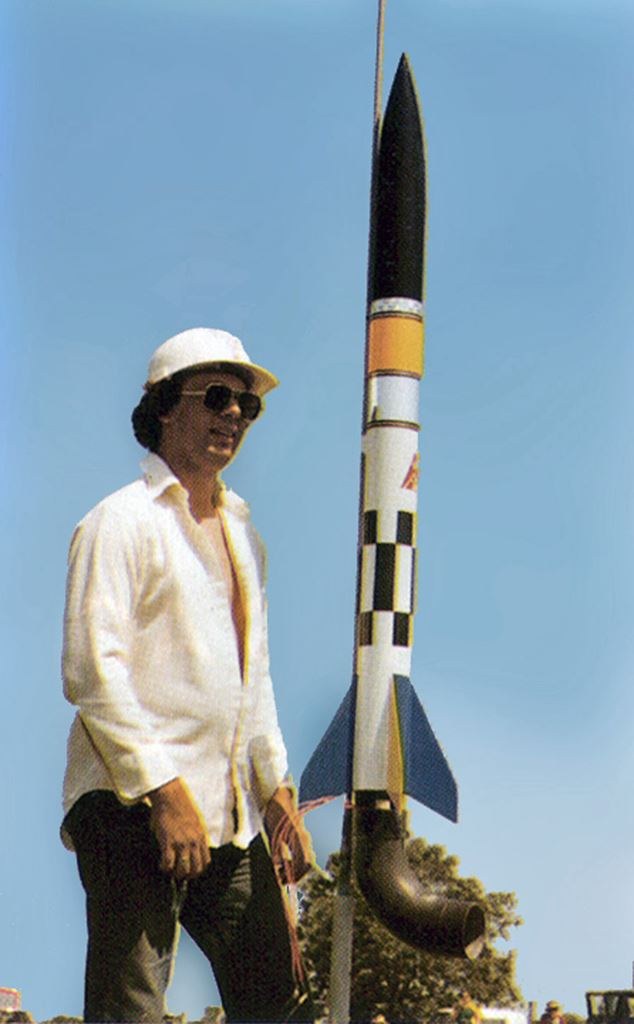
In 1982, Chris Pearson organized a launch near Medina, Ohio, for people flying rockets bigger than the model-rocket rules allowed. He called it LDRS, for “Large and Dangerous Rocket Ships”. Tripoli’s history calls LDRS-1 “groundbreaking”. It brought together, for the first time, people across the country who had been working independently on larger rockets and motors. Tripoli’s history credits the first several LDRS launches with the networking that made a national organization possible.
That organization took shape quickly:
- 1984. Tom Blazanin, who had earlier tried to unite high-power flyers in an “Advanced Rocketry Society”, joined Tripoli. The club reorganized as the Tripoli Rocketry Society, geared to “high-powered model rocketry”.
- 12 April 1985. At a meeting in Cincinnati, called by Mark Weber with backing from the motor manufacturers, an attempt to found a new national organization stalled. Blazanin offered his Pittsburgh group as a ready-made base, and “with a simple word change, the Tripoli Rocketry Association came into existence”. Its stated aim was a national organization for non-professional rocketry above the level described by the NAR, working within the National Fire Protection Association’s code for model rocketry, NFPA 1122.
- LDRS-4 (1985), again at Medina, introduced Tripoli to the country. Gary Rosenfield of AeroTech was there.
- January 1986. After a split in the interim board, a nine-member board of directors was elected, with Tom Blazanin as president.
- 18 July 1986. Tripoli Rocketry Association, Inc. was incorporated as a non-profit.
- LDRS-5 (1986), the last LDRS at Medina, saw the first board meeting and general assembly, and the launch of Tripoli’s “Consumer Confirmation Membership Card”, which gave members legal access to the larger motors and grew into today’s membership and certification card.
- 1 January 1987. The Tripoli Advanced Rocketry Safety Code took effect. The same year Tripoli was given the rights to the LDRS name for its national launch.
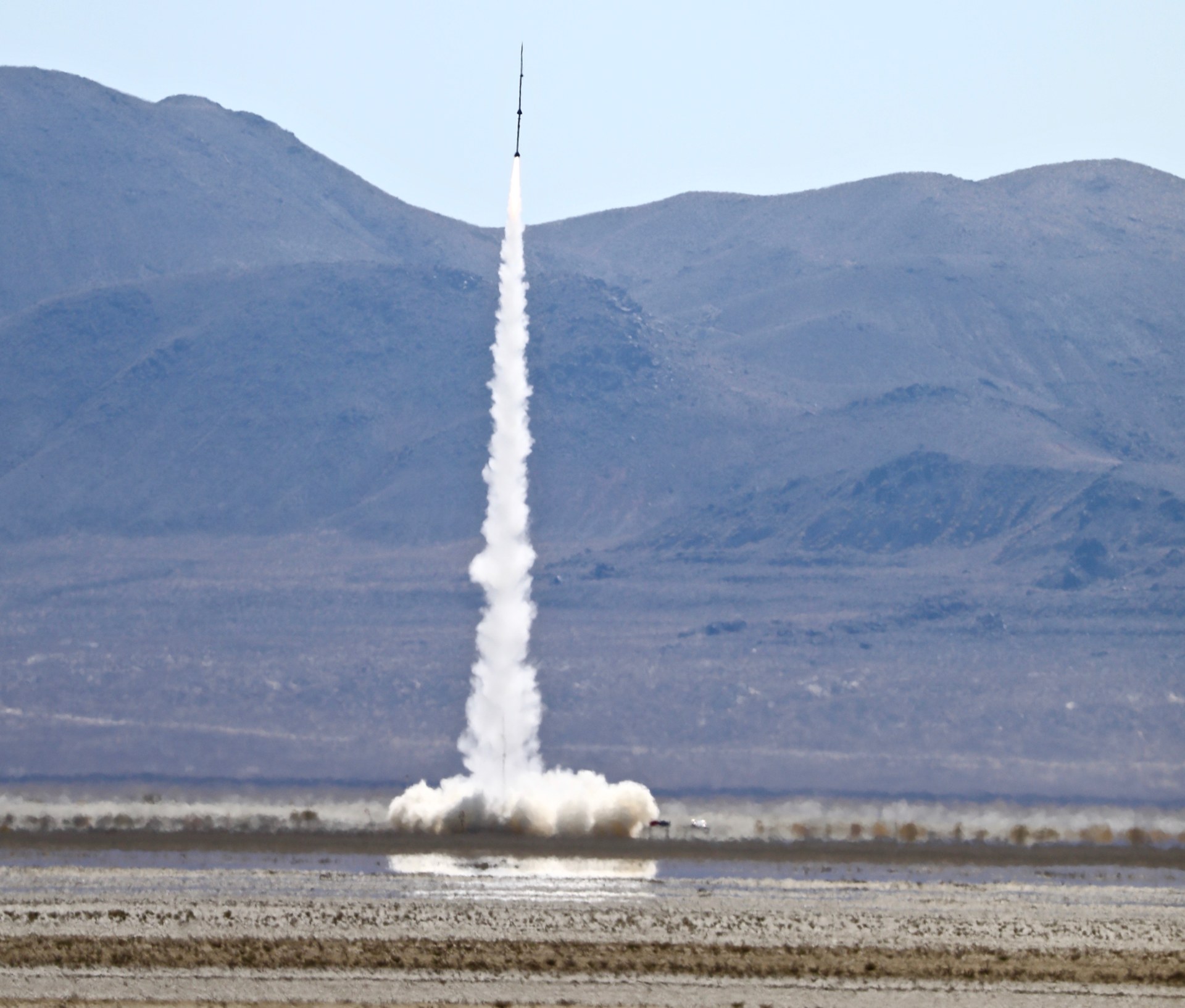
LDRS has moved around the country since. Tripoli also added a second national event for its most advanced projects: BALLS, held on the Black Rock Dry Lake in Nevada, where “research” motors that members design and make themselves, codified by Tripoli for safe use at its launches, power the biggest and fastest amateur rockets in the hobby.
2.4 AeroTech and the composite motor industry
The motors for this new hobby came from a handful of small companies. The longest-lived is AeroTech. Its own published history gives the main dates:
Table 1 — The motors for this new hobby came from a handful of small companies. The longest-lived is AeroTech. Its own published history gives the main dates
| Year | Event |
|---|---|
| 1982 | Gary C. Rosenfield founds AeroTech in Sacramento, California, to make solid composite-propellant hobby motors. The first included the G30, and the E6 and F10 contest motors. |
| 1985 | Rosenfield and Daniel H. Meyer found Industrial Solid Propulsion (ISP); AeroTech and ISP move to Las Vegas, Nevada. |
| 1988 | AeroTech becomes the largest supplier of advanced composite hobby motors. |
| 1989 | AeroTech buys the assets of Enertek of Phoenix; a new mid-power (E to G) line launches at the end of the year. |
| 1990 | The Reloadable Motor System (RMS) for high power, under the ISP name. |
| 1991 | Reloadable motors extended to model-rocket sizes. |
| 1995 | RMS/Hybrid reloadable hybrid motors. |
| 1997 | Econojet single-use motors. |
| 2002–03 | AeroTech and ISP move to Cedar City, Utah. |
| 2004 | RCS Rocket Motor Components buys AeroTech and ISP. |
| 2013 | Disposable Motor System (DMS); RCS buys Quest Aerospace. |
| 2018 | Quest’s Q-Jet composite model-rocket motors. |
| 2019 | Mid-power kits and motors rebranded “Enerjet by AeroTech”. |
Enertek, the Phoenix firm AeroTech absorbed in 1989, had been founded by Lee Piester and other former Centuri people. Quest Aerospace, also of Phoenix, was another company in the Centuri line, and briefly, around 1992, the employer of Apogee Components’ founder Ed LaCroix. The black-powder catalog industry of the first volume and the composite industry of this one were never as separate as they looked.
AeroTech was not alone. Cesaroni, a Canadian maker, became a second major source of commercial reloadable high-power motors, and a series of smaller companies have made single-use and reloadable motors for the American market over the years; Van Milligan’s Peak of Flight #624 (2024) compares the AeroTech and Cesaroni propellant ranges.
2.4.1 What “reloadable” means
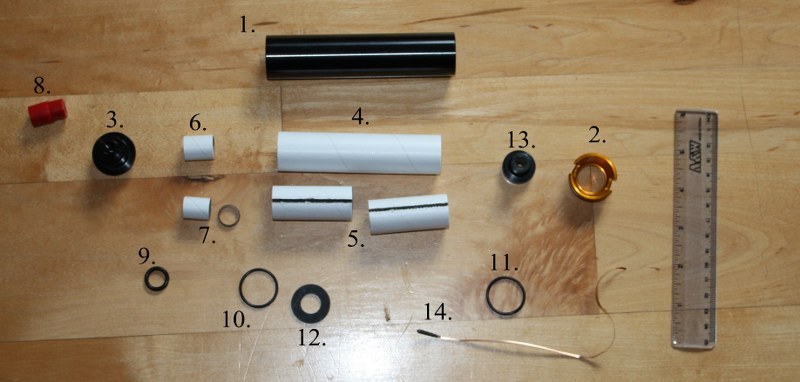
A reloadable motor separates the expensive, reusable parts from the consumable ones. The flyer owns an aluminum casing with screw-on closures, and buys the reload: the propellant grains, liner, nozzle, O-rings, insulators, delay and ejection charge. After the flight, the casing is cleaned and reloaded. The flyer assembles the motor, but still never mixes or casts propellant; the grains come from the factory, made and certified as a set. That keeps reloads inside the hobby’s founding principle while cutting the cost of a high-power flight to a fraction of a single-use motor’s.
The motors themselves, and how to choose and buy them, are the subject of the Motors dive.
2.5 Certification and the two organizations
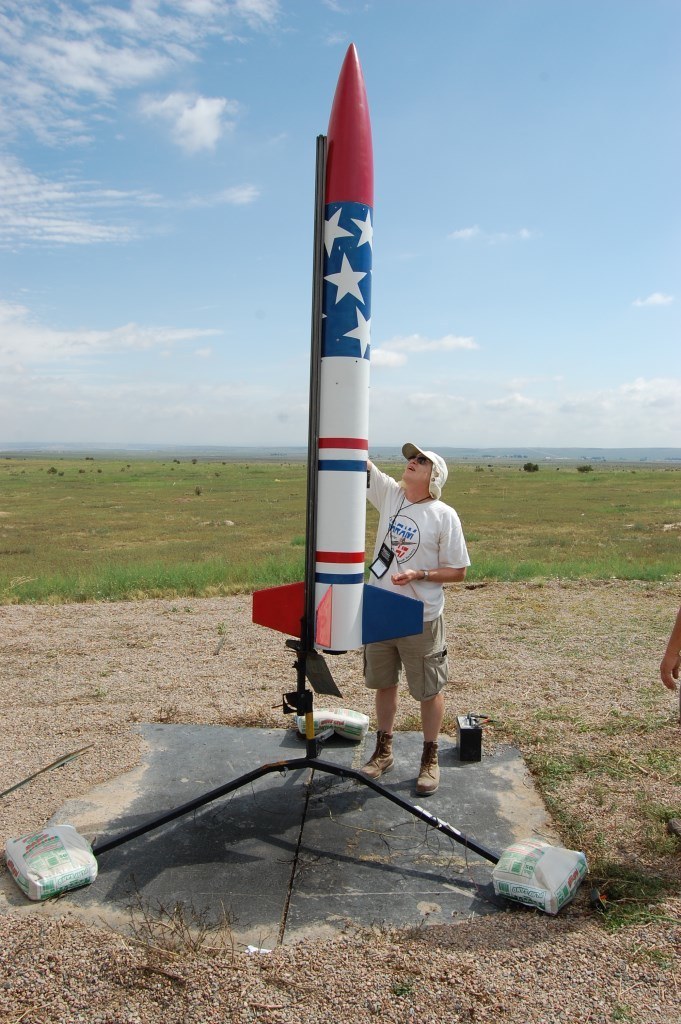
Composite motors made high-power rocketry possible; certification made it governable. A flyer who wants to buy and fly high-power motors must first show, on a flight witnessed by the organization, that he can build and fly a rocket of the class safely.
Tripoli’s Consumer Confirmation card of 1986 was the start. Both organizations now run a three-level program. The NAR’s own description of Level 1 is that it “allows the purchase and use of H and I impulse class motors, both solid and hybrid, by adult NAR members”. Level 2 requires a Level 1 certification, an online written examination and a certification flight on a larger motor. Level 3, for the largest commercial motors, requires a Level 2 certification, a log of at least three Level 2 flights, and a separate application in which the project is reviewed before it flies. A flyer certified by either organization can take part in high-power flying.
Motor certification is a separate system. Before a motor may be sold to hobbyists, it is tested on a thrust stand by one of the recognized testing bodies: Tripoli’s Motor Testing (TMT) committee, the NAR’s Standards and Testing committee, or, for Canada, the Canadian Association of Rocketry (CAR). The thrust curves those tests produce are the raw material of every flight simulation. In Peak of Flight #534 (2020), John Coker told how he obtained raw TMT test-stand data in 1998 and turned it into the first version of thrustcurve.org, rebuilt it in 2006 around the full list of certified motors, and redeployed it in late 2020.
2.6 The law: the FAA and the ATF
Two federal agencies govern rockets in the United States, for different reasons. The FAA cares about airspace. The ATF cares about explosives.
2.6.1 The FAA
The FAA’s rules for unmanned rockets are in 14 CFR Part 101. The Basic Rockets dive describes the 1994 change that raised the model-rocket limits to 1,500 grams and 125 grams of propellant. The bigger change for high power came in a final rule published on 4 December 2008 and effective 2 February 2009, which reorganized amateur rocketry into three classes:
- Class 1 — Model Rocket. Light, slow-burning propellant, breakable materials, no more than 1,500 g including propellant; exempt from notification when flown within the operating limits.
- Class 2 — High-Power Rocket. An amateur rocket other than a model rocket whose motors have “a combined total impulse of 40,960 Newton-seconds (9,208 pound-seconds) or less”.
- Class 3 — Advanced High-Power Rocket. Anything larger, up to the total-impulse ceiling of the amateur-rocket definition, 889,600 newton-seconds.
Class 2 and Class 3 flights need advance notice to, or authorization from, the FAA. Clubs that host high-power launches arrange that authorization for their launch sites, usually called a waiver.
2.6.2 The ATF and the APCP case
The ATF question was harder, and it took a decade in court to answer. The court record of Tripoli Rocketry Association v. Bureau of Alcohol, Tobacco, Firearms, and Explosives sets out the history.
APCP had been on the federal explosives list since the first list was published in 1971. In an April 1994 letter to AeroTech’s president, Gary Rosenfield, the agency explained that it had never meant to regulate toy model rockets, but that composite propellant was an explosive because it was on the list. Fully assembled motors could be exempt as “propellant actuated devices”, but only if they contained no more than 62.5 grams of propellant. Larger motors, and propellant reloads before assembly, needed federal explosives licenses or permits, and magazine storage.
Tripoli and the NAR challenged that position in a letter of 7 September 1999, arguing that APCP does not “function by explosion” at all. The agency refused, saying in a December 2000 letter that APCP “most definitely functions by deflagration” and was therefore an explosive. The two organizations sued, in federal district court in Washington, D.C., in a case numbered 00-0273. In 2004 the district court sided with the agency on whether APCP was an explosive. Meanwhile the Homeland Security Act of 2002 moved responsibility for the explosives list to the Attorney General, and the agency became the ATFE.
On 10 February 2006, the U.S. Court of Appeals for the D.C. Circuit reversed. The opinion, by Senior Circuit Judge Harry Edwards for a panel with Judges Tatel and Garland, found that the agency’s “explanation for its determination that APCP deflagrates lacks any coherence”. The agency had neither set a concrete standard for sorting materials along the burn–deflagrate–detonate scale nor offered data on how fast APCP actually burns in a rocket motor. The court sent the case back for reconsideration.
The end came three years later. In a 16 March 2009 order, the district court vacated the agency’s classification of APCP as an explosive. The ATF’s own guidance afterwards stated that APCP, and rocket motors containing only APCP, are no longer regulated as explosives under the federal explosives laws, and the annual list published on 8 January 2010 removed APCP. The case freed hobbyists from federal explosives permits and magazines for composite motors. State and local fire codes, and the hobby’s own certification system, still apply.
2.7 Estes after the boom
At the black-powder end, Estes went through a long series of owners while staying in Penrose. After Damon’s purchase in 1969, Estes and Centuri ran in parallel until the Centuri line was discontinued in 1983. In 1989–90, after a hostile takeover of Damon, Estes was sold off and the business renamed Centuri Corporation; at the time Estes had about 200 employees and some $15 million a year in sales. The company bought the Cox model-aircraft business in 1996, became Estes-Cox in 2002, was bought by the hobby distributor Hobbico in January 2010, and passed to Estes Industries LLC on 12 April 2018 after Hobbico’s bankruptcy.
Through all of it, the catalog went on. In the 2010s Estes moved into larger rockets with its Pro Series II line, which for several years (2013–2018) flew on relabeled AeroTech 29 mm composite motors. Its flagship is the Mega Der Red Max: a 4-inch-diameter, 40-inch-long upscale of the 1971 Der Red Max, It was on the market by 2015 as kit 9705, with a single 29 mm mount for F and G composite motors; the current kit, 9738, flies on a cluster of three E16 motors instead. The Mega Der Red Max is one of my favorites. So is the Mars Snooper, which I have built from the Estes kit and again as a much larger high-power rocket.
2.8 Apogee Components, RockSim and Peak of Flight
Apogee Components connects the contest tradition of the first volume to the software age. Tim Van Milligan told its history himself in Peak of Flight #89 (2002) and #500 (2019).
Apogee was founded in 1987 by Edward LaCroix, then living in Minneapolis, a serious contest flyer who wanted better materials for competition models. Its first products were phenolic “BlackShaft” tubes, injection-molded parabolic nose cones, the Nova Eggcone for egg-lofting contests, thin “waferglass” fiberglass sheet for fins, aluminized Mylar parachute material, Micafilm streamers and a launch tower. In 1990 LaCroix introduced the 13 mm B7 and the short 18 mm C10 “Medalist” composite motors, which, Van Milligan wrote, “really upset the status quo in competition”: a motor twice as powerful as the Estes Mini A3 in nearly the same size. Around 1992 LaCroix joined the new Quest Aerospace and moved Apogee with him to Phoenix.
Van Milligan had worked as a rocket designer at Estes from August 1991 until February 1994. Out of work, he went to LaCroix with an idea for a new competition motor. LaCroix, about to take a job as AeroTech’s marketing director, offered him the company instead. Van Milligan took over in 1994, buying little more than the name and a small stock of parts, incorporated Apogee in Colorado in 1995, and ran it from a spare bedroom in an apartment in Cañon City before moving to Colorado Springs, where the company has been ever since. Also in 1994 he wrote the first edition of his book Model Rocket Design and Construction.
2.8.1 RockSim
Apogee’s most influential product is software. RockSim was developed at Apogee in the 1990s; Peak of Flight #652 (2025) recalls that its first flight events were only parachute deployment and staging, because “most modelers … were used to Estes black powder motors”. Peak of Flight #2 (2000) previewed RockSim version 5, and version 8 was released in May 2005. RockSim lets a designer draw a rocket part by part, computes its CG and CP (by the Barrowman method or RockSim’s own method, which Van Milligan compared in Peak of Flight #238), and simulates flights on any certified motor’s thrust curve, with wind, launch-rod length, staging, deployment events and recovery descent. The RockSim dive covers the program in detail.
The free alternative arrived in 2009. OpenRocket began as Sampo Niskanen’s master’s thesis at the Helsinki University of Technology, Development of an Open Source model rocket simulation software. Early versions were released as open source in 2009, with CG and CP and drag estimation and a six-degree-of-freedom flight simulation. A volunteer community has kept developing it since.
2.8.2 Peak of Flight
Van Milligan started his newsletter as marketing, modeled on what Estes had done with its catalog and technical reports. The first issue of Peak of Flight went out on 16 April 2000, aiming at an article a week. The 500th appeared on 23 July 2019. Over a quarter of a century it has become an informal encyclopedia of the hobby: construction techniques, aerodynamics, motor choice, electronics, contest rules and, from time to time, history.
I have read nearly every issue. The site’s Reference Library holds 667 of them, from issue 1 to issue 677, and they are cited throughout this dive.
2.9 Electronics: from film to flight computers
The first volume ended with film cameras in nose cones. The modern rocket carries a computer.
The first electronics that mattered in high power were for deployment. A big rocket cannot use the motor’s fixed delay to deploy a parachute: the delay is wrong for most flights, and a large main parachute opened at apogee will drift the rocket out of the county. The answer is dual deployment: an electronic altimeter senses apogee from the change in air pressure and fires a small charge to deploy a drogue, so the rocket falls fast but stable, then fires a second charge at a set altitude near the ground to deploy the main parachute. Electronic timers also took over staging and air-starting composite motors, which unlike black powder cannot be lit reliably by the burnout of the stage below.
By 2002, Peak of Flight #91, on electronic staging of composite motors, could list several commercial makers of programmable timers and flight computers, among them Missile Works, PerfectFlite and G-Wiz. The altimeter, once a contest instrument, became standard equipment on any rocket above the mid-power range, and many high-power flyers carry two independent altimeters, so that one can deploy the parachutes if the other fails.
Cameras changed just as much. The film Camroc, Cineroc and Astrocam gave way to video. In the 2010s, cheap “keychain” video cameras were so common in rockets that a 2016 Peak of Flight builder (#423) specified an electronics bay large enough for “no keychain cameras”, but rather a live video transmitter sending pictures to the ground. GPS trackers report where a rocket landed, and telemetry radios send altitude, speed and position to the ground in real time. By 2012 Apogee was advertising a single payload combining GPS tracking, telemetry and dual-deployment control.
My own rockets followed that path, from film cameras to electronic video, and from motor ejection to electronic deployment, GPS location and altitude reporting.
The Payload Electronics and Recovery dives cover these systems in detail.
2.10 Building: from balsa and a hobby knife to the laser cutter
For most of the hobby’s history, a modeler cut fins from balsa sheet with a hobby knife, using a paper template from the kit, and turned nose cones on a lathe or bought them. High power brought plywood and fiberglass fins, phenolic and fiberglass tubes, epoxy and through-the-wall fin mounting. The newest change is digital fabrication.
Van Milligan’s column in Peak of Flight #366 (2014), written after Apogee bought a laser cutter, regretted not getting one twenty years sooner and looked forward to his next tool: a 3D printer. Within a few years, laser-cut fins and centering rings and 3D-printed nose cones, fin cans, motor retainers and electronics sleds were ordinary, and the newsletter was running articles on how to use them; in 2020 (#534) it urged readers to “expand your toolkit with a makerspace”. A rocket can now be designed in RockSim or OpenRocket, its fins cut from outlines exported from the same design, and its nose cone printed overnight.
I have designed many of my own rockets and built many from scratch.
The Fabricated Parts and Jigs and Finishing dives cover the tools and methods.
2.11 The hobby today
More than seventy years after Orville Carlisle filed his patent, the hobby he started has two ends that would be barely recognizable to each other:
- At the low end, the classic hobby goes on largely unchanged. Estes still makes black-powder motors in Penrose and sells kits whose designs date back to the 1960s, alongside ready-to-fly rockets and reissues of the classics. Composite model-rocket motors from AeroTech, Quest and others sit on the same shelves.
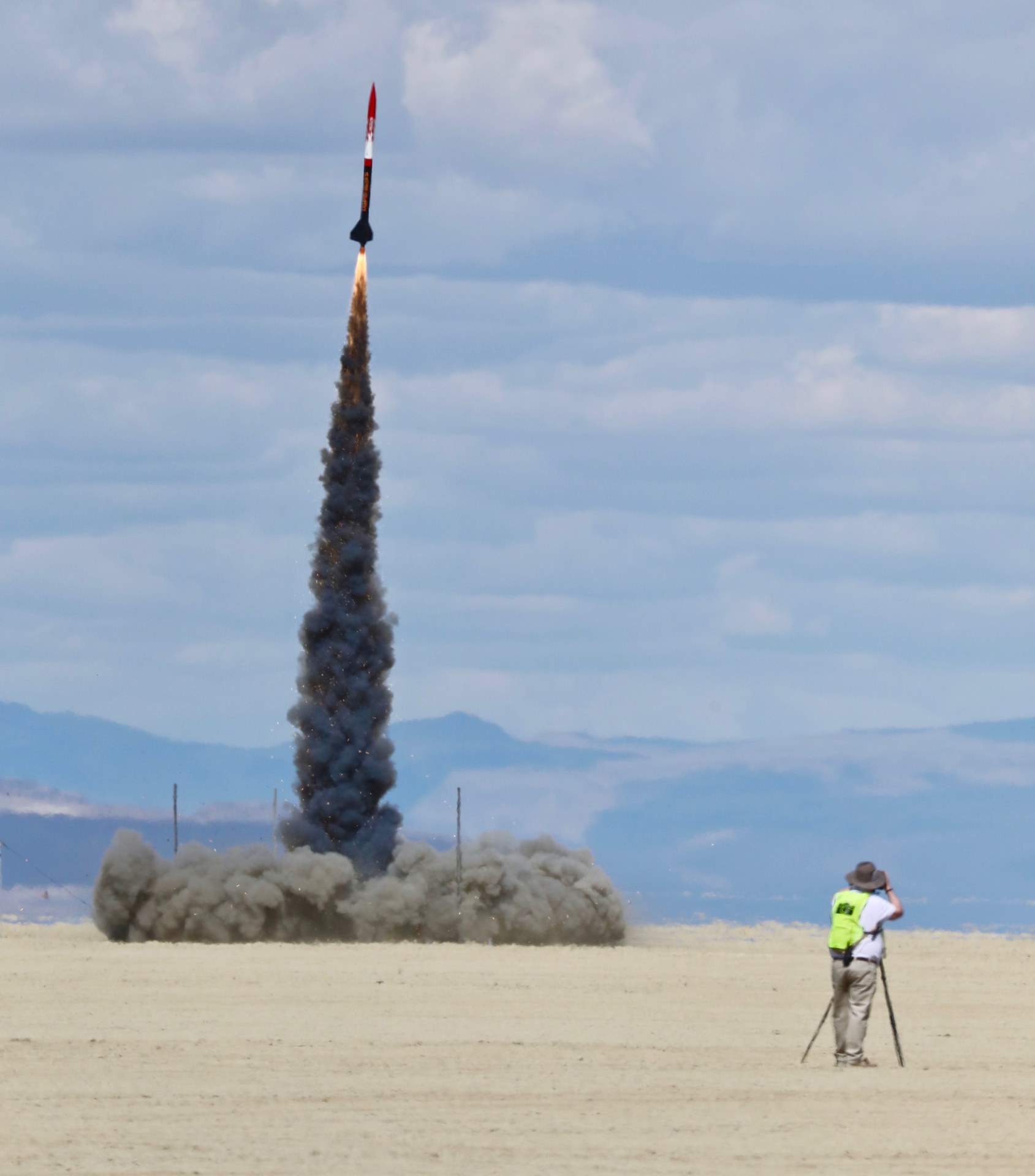
- At the high end, Tripoli and the NAR certify high-power flyers, BALLS draws flyers from around the world, and amateur rockets fly on motors bigger than anything the 1950s rocket clubs imagined, under FAA waivers, with flight computers, GPS and live video.
The tools in between have converged. The same simulation software designs both ends, the same thrust-curve data drives it, and the same laser cutters and printers make the parts. Much of what the hobby knows about itself is written in the archive of Peak of Flight.
The safety principles of 1957 survived all of it. The flyer still uses a certified commercial motor (or, at Tripoli’s research launches, a motor made under a code built for that purpose), still launches electrically from a distance, and still brings the rocket back to fly again.
Sources
- Tripoli Rocketry Association, Tripoli History (Tripoli’s origin, LDRS, incorporation, certification card, safety code, BALLS) — https://www.tripoli.org/History.
- AeroTech / Quest, History — https://aerotech-rocketry.com/pages/history.
- Tripoli Rocketry Association, Inc. and National Association of Rocketry v. Bureau of Alcohol, Tobacco, Firearms, and Explosives, No. 04-5453, U.S. Court of Appeals for the D.C. Circuit, decided 10 February 2006, 437 F.3d 75 — https://media.cadc.uscourts.gov/opinions/docs/2006/02/04-5453a.pdf.
- Bureau of Alcohol, Tobacco, Firearms and Explosives, Commerce in Explosives; List of Explosive Materials, Federal Register, 8 January 2010 (APCP removed after the 16 March 2009 order in No. 00-0273) — https://www.govinfo.gov/content/pkg/FR-2010-01-08/html/2010-45.htm.
- Federal Aviation Administration, Requirements for Amateur Rocket Activities, final rule, Federal Register vol. 73, 4 December 2008, effective 2 February 2009 — https://www.govinfo.gov/content/pkg/FR-2008-12-04/html/E8-28703.htm.
- National Association of Rocketry, High Power Rocketry Certification — https://nar.org/HPRCertification.
- Tim Van Milligan, “Apogee Components: A Short Company History”, Peak of Flight #89 (2002). (Library copy)
- Tim Van Milligan, “A Retrospective History of the Peak-of-Flight Newsletter”, Peak of Flight #500 (2019). (Library copy)
- “Apogee Releases RockSim v8 Software”, ROL news item, May 2005 — https://www.polytechforum.com/rockets/rol-news-apogee-releases-rocksim-v8-software-62490-.htm.
- Tim Van Milligan, “Preview of RockSim V5.0”, Peak of Flight #2 (2000); “Why is There a Fake Motor in RockSim?” (history of RockSim’s flight events), Peak of Flight #652 (2025). (Library copy) (Library copy)
- Peak of Flight #91, “Electronic Staging of Composite Propellant Rocket Motors” (2002); #366 (2014); #423, “Building a Hatch-Accessible Ebay” (2016); #314 (2012, advertisement); #624, “Picking Propellant Types from AeroTech and Cesaroni” (2024). (Library copy)
- John Coker, “A History of Motor Analysis & Thrustcurve.org”, Peak of Flight #534 (2020). (Library copy)
- Niskanen, Sampo, Development of an Open Source model rocket simulation software, master’s thesis, Helsinki University of Technology, 2009; OpenRocket documentation — https://wiki.openrocket.info/Introduction.
- “Centuri Corporation”, International Directory of Company Histories (via Reference for Business) — https://www.referenceforbusiness.com/history2/9/Centuri-Corporation.html.
- Wikipedia, Estes Industries (ownership after 1989; Pro Series II motors) and Tripoli Rocketry Association (cross-checked against the sources above).
- Estes Industries, Mega Der Red Max product page and sales sheet (kit 9738; 4 in × 40 in; three-motor cluster) — https://estesrockets.com/products/mega-der-red-max.
- Rocket Reviews, Estes Mega Der Red Max (kit 9705, reviewed 2015) — https://www.rocketreviews.com/product-165527.html; Estes Der Red Max (1971 Citation Series) — https://www.rocketreviews.com/estes-der-red-max-model-rocket-kit.html.